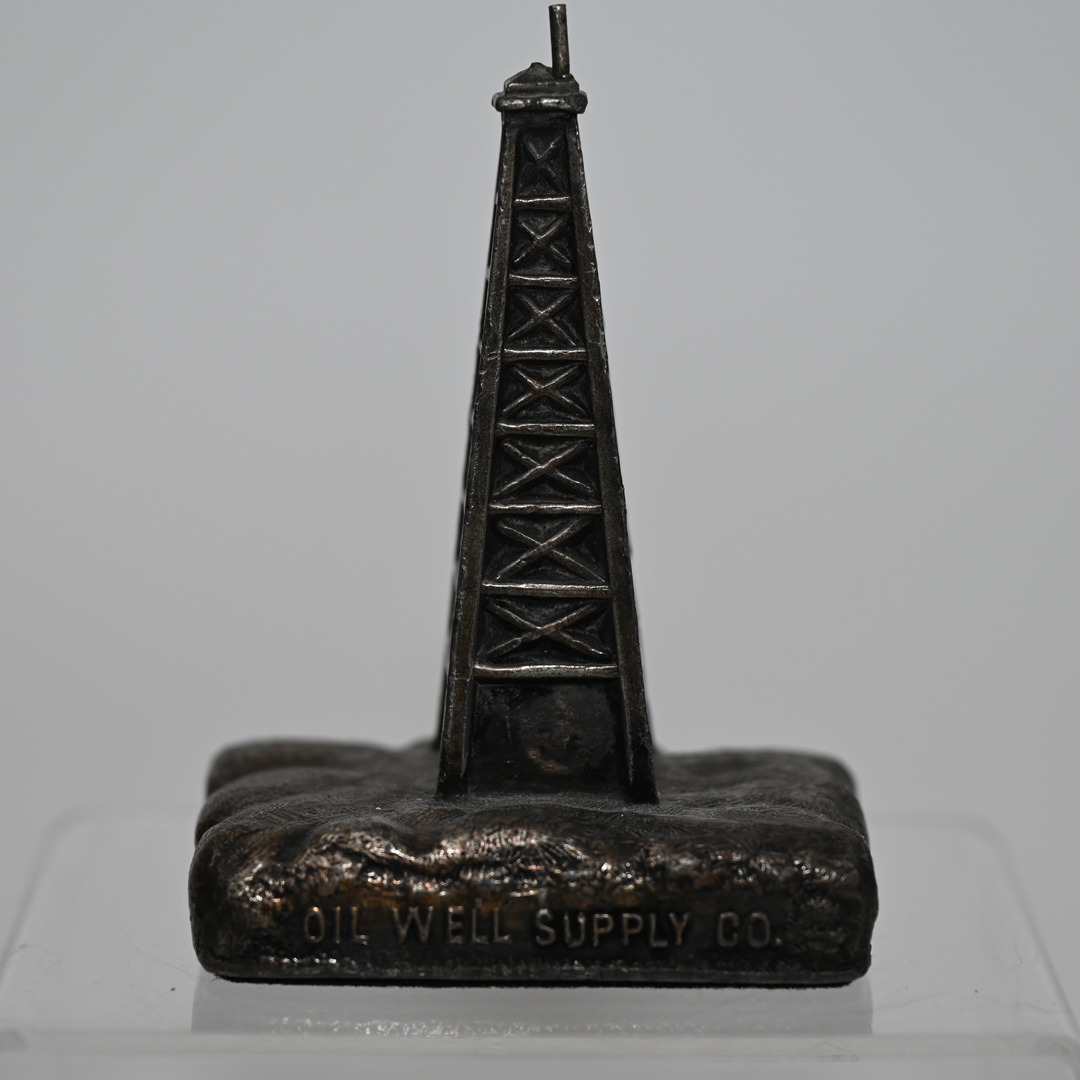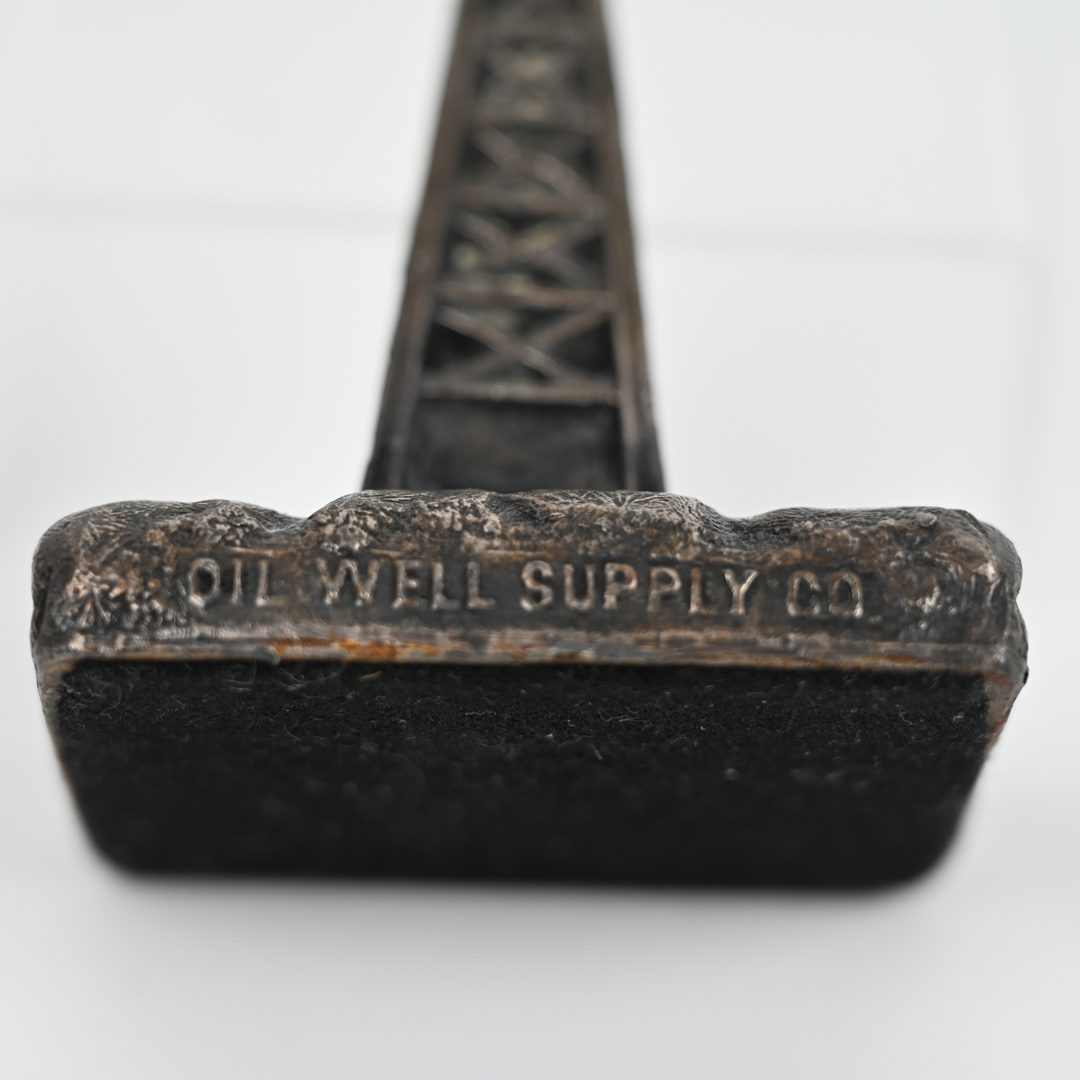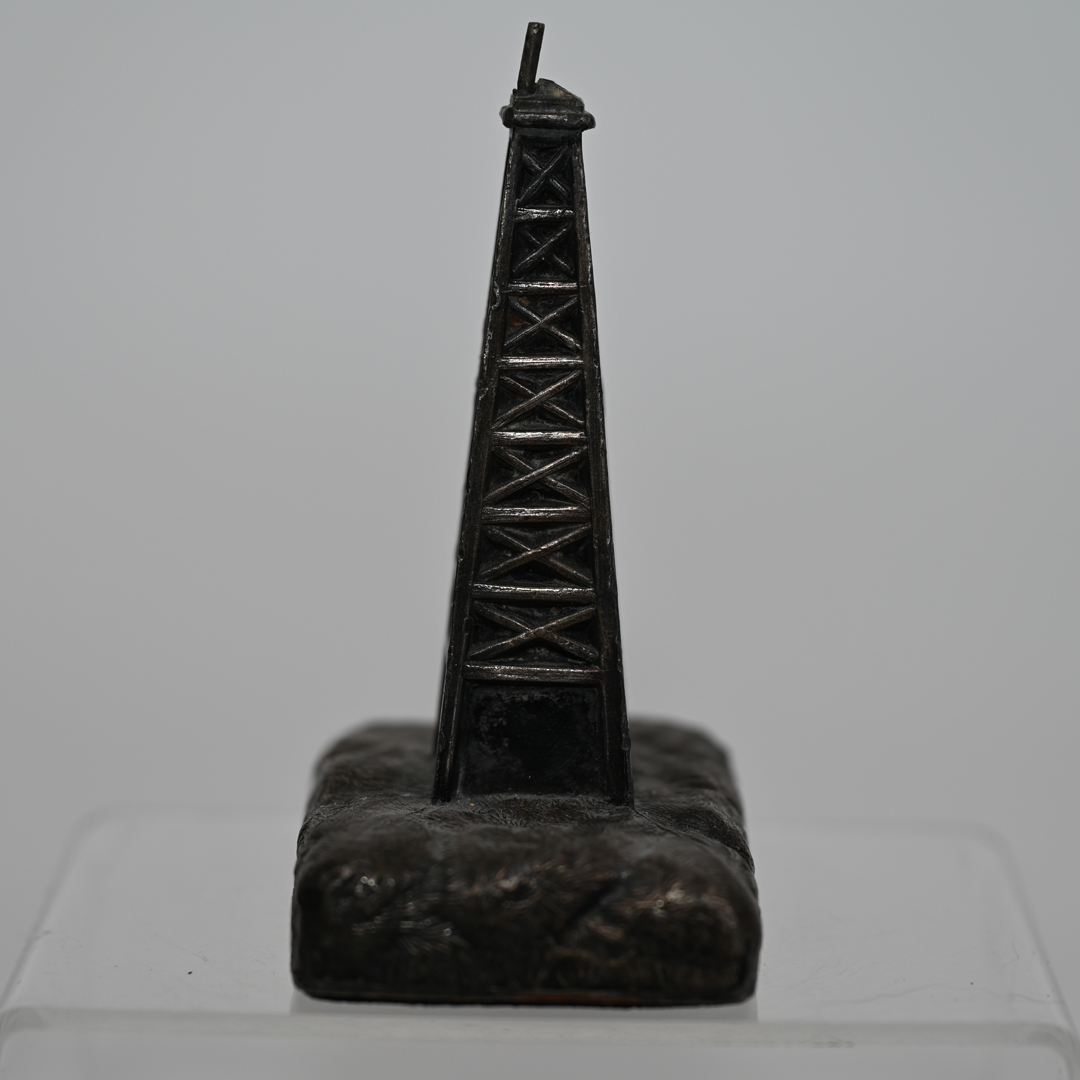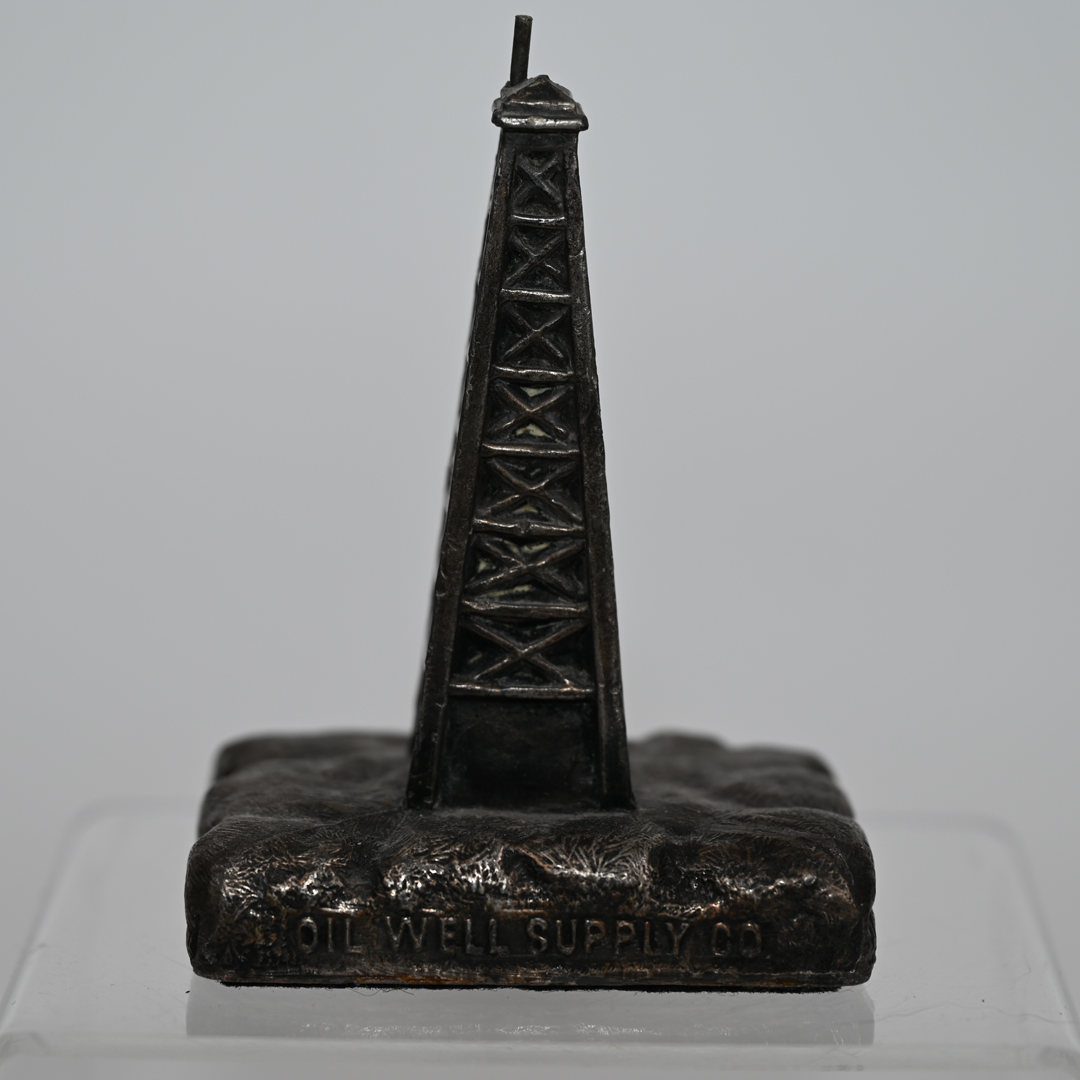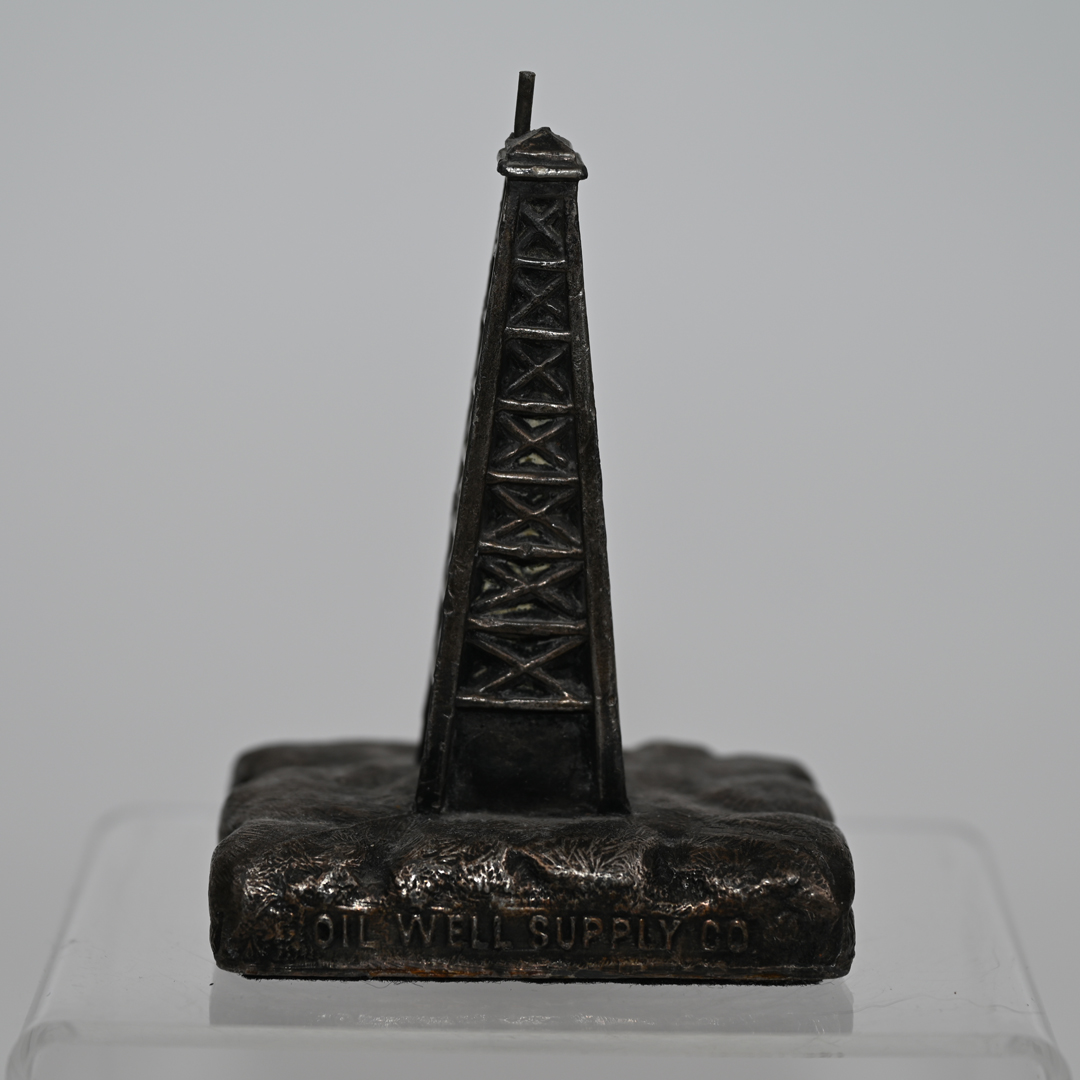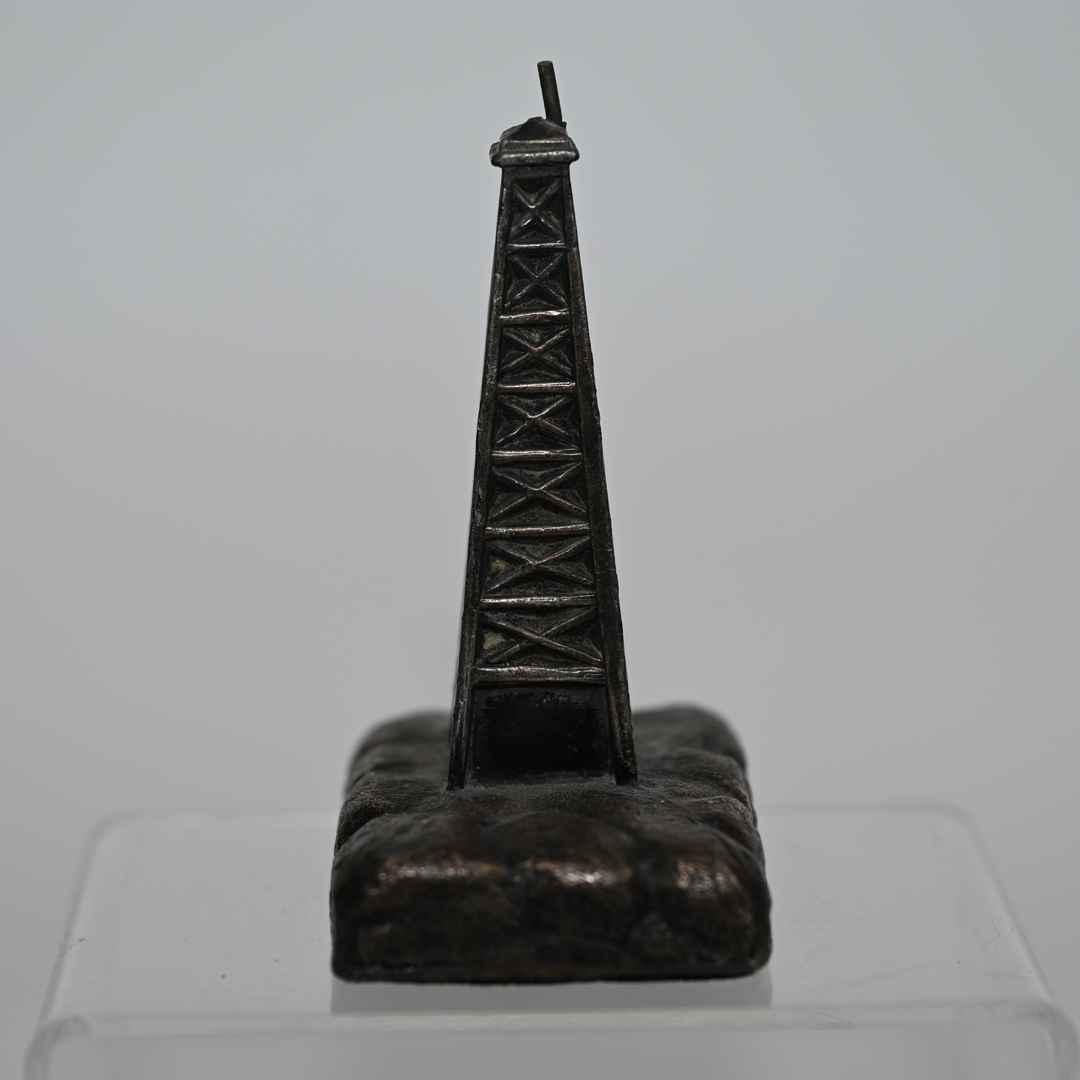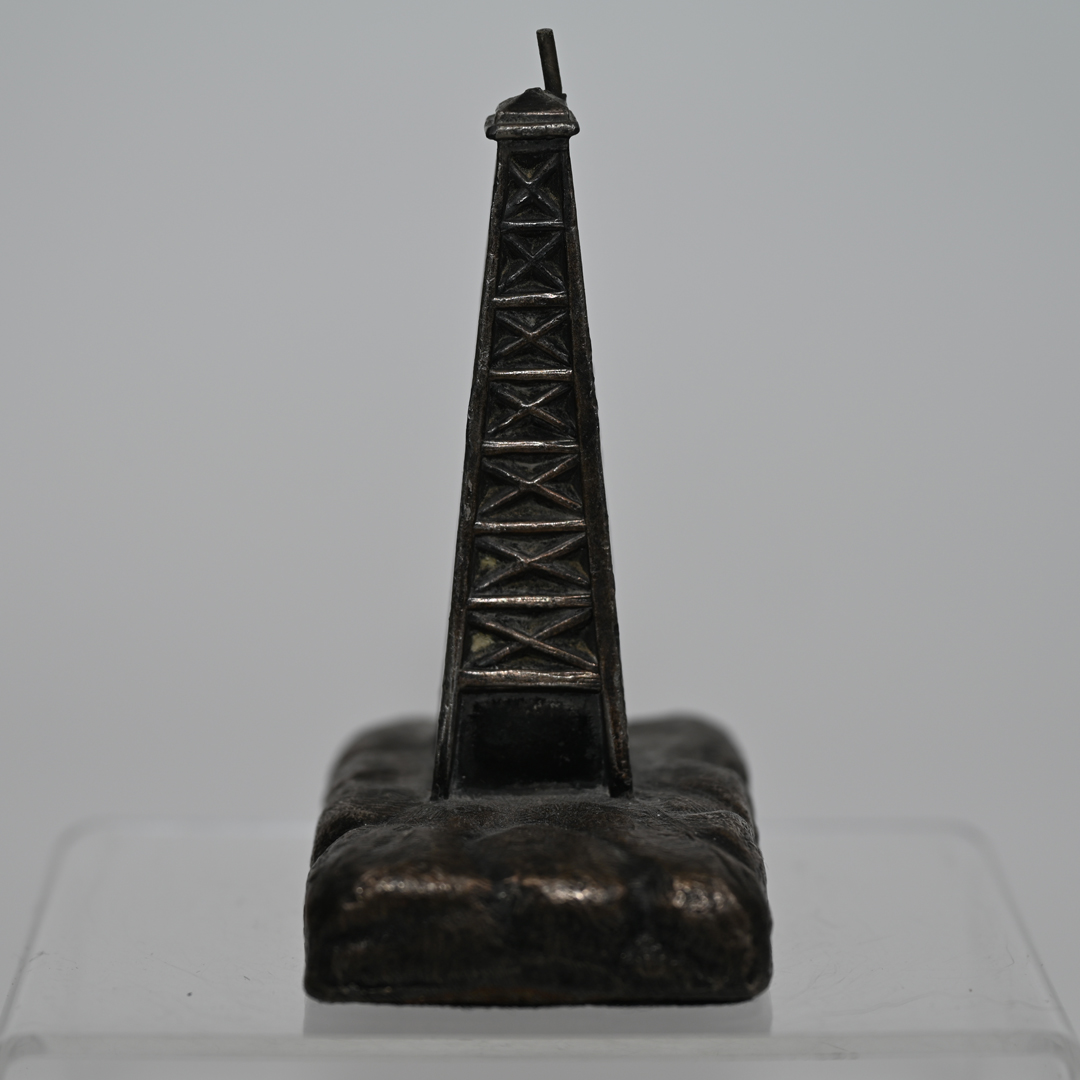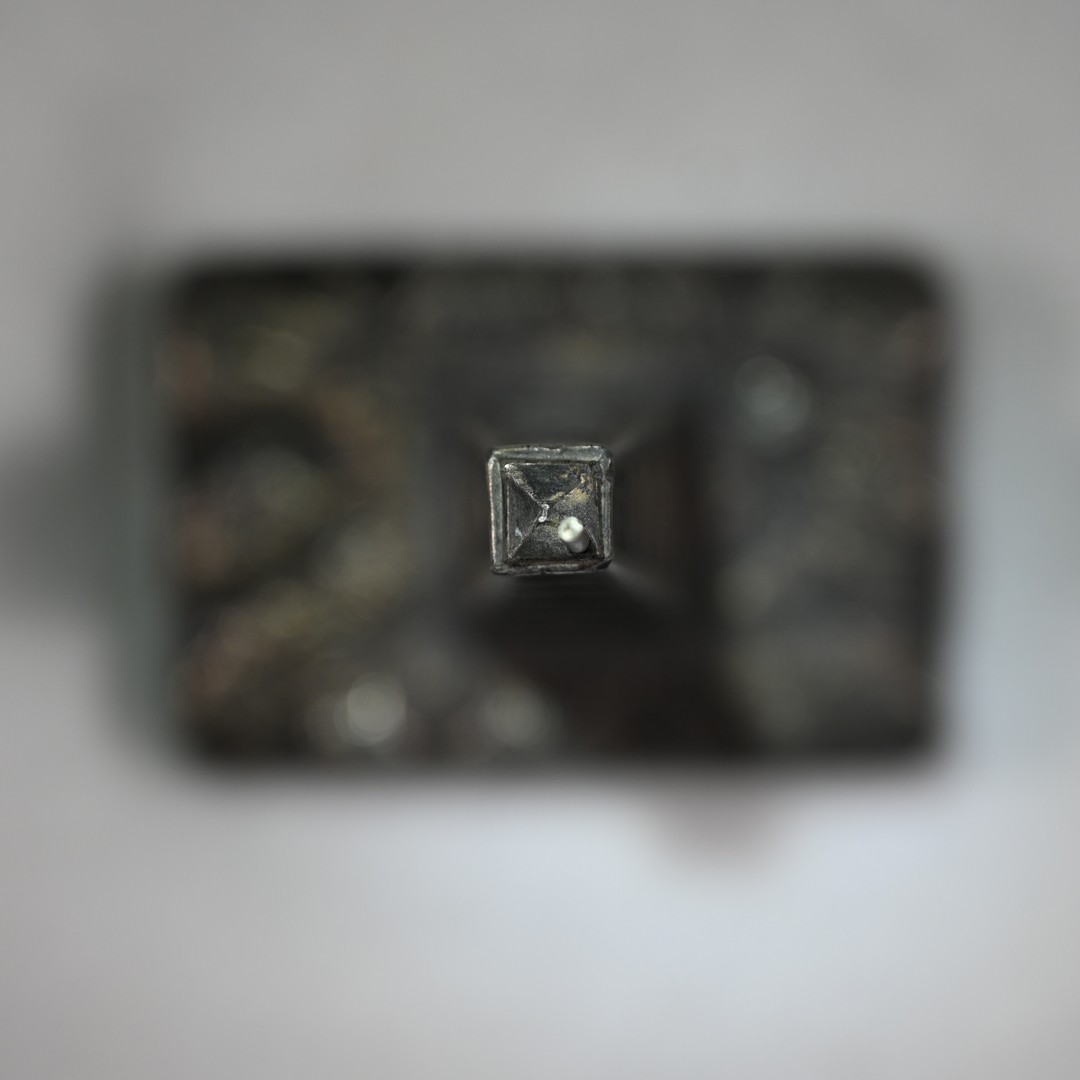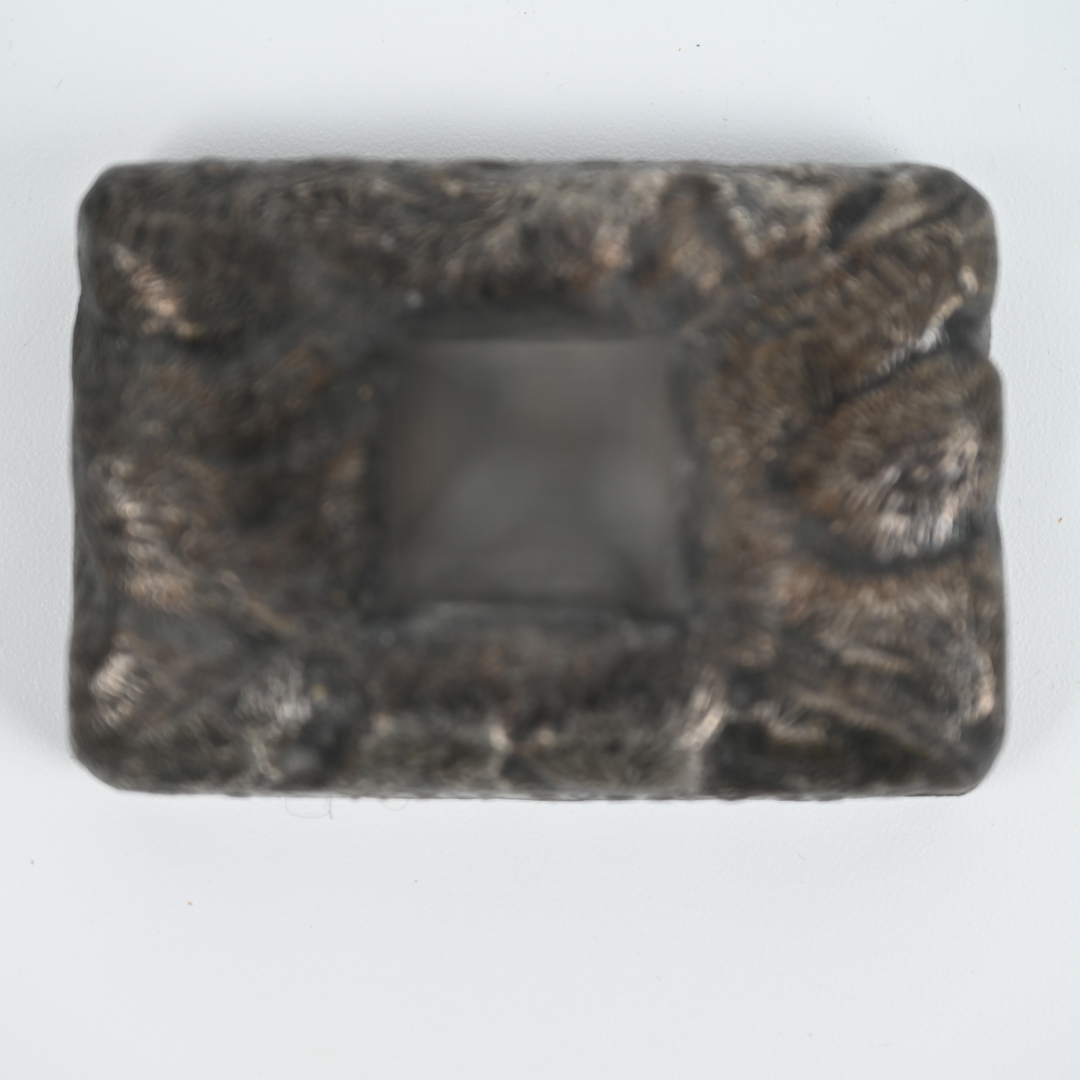
A paperweight resembling a Canadian pole tool drilling rig, which was invented by the Oil Well Supply Co – as embossed on both sides. We have conflicting histories. Did you know that oil was discovered in Oil Spings, Ontario, Canada in 1858 by James Miller Williams, a blacksmith, who was digging for water and accidentally found oil. That was a year before the 1859 discovery of oil by Edwin Drake in Titusville, Pennsylvania. (1) The Canadian side of the story is that Oil Well Supply Company was started by Hector McKenzie, a machinist that opened his shop in Petrolia, Ontario in 1865. Five years later, James Joyce opened a blacksmith shop. In 1890, they joined forces to start the Oil Well Supply Company. The Canadian company, Oil Well Supply Co Ltd is still operating in Petrolia, Ontario. (2) The American version of the story is that Eaton, Cole and Burnham Company, founded by John Eaton in 1867 , a manufacturer of pipe fittings and valves as well as pipe cutting and threading machines, became Oil Well Supply Company in 1877. In 1900, it opened a plant in Oil City, Pennsylvania to manufacture oil well equipment. The American, Pittsburgh based Oil Well Supply Company was purchased by US Steel in 1930.
We suspect the Canadian story is the relevant one. They are associated with the development of tools for drilling and pumping oil wells including, importantly, the Canadian pole tool drilling rig – which the advertising paperweight replicates.
Of all the innovations to come from Lambton County [ where Petrolia is located ], the Canadian pole-tool drilling method possibly had the largest impact in oil fields around the world. The Canadian pole-tool drilling method was based upon a beautifully simple design. The rig was a four-pole derrick stabilized by cross beams and, to make the rig easier to traverse across the muddy fields of Lambton County, it was equipped with sled-like runners, allowing it to be dragged across the land. The rigs themselves were powered by steam engines. Steam powered an engine, using the engine’s strokes to turn a flywheel. The flywheel moved a belt that moved the drill wheel. A camshaft mounted to the drill wheel converted the circular motion of the drill wheel into vertical motion, causing a walking beam to pound a drill bit through solid rock. As the bit went deeper, drill rod extensions, made from black ash poles with iron connectors, could be added to drill wells as deep as 3,500 feet. It was these black-ash poles that gave the rig its name and differentiated it from other drilling methods. ” Courtesy of International Well Drillers, a Canadian virtual museum documenting the Canadian contribution of pioneering oilmen that left Canada in search of oil and, in turn, spread their knowledge around the world: https://internationaloildrillers.ca/collections/drilling-techniques/canadian-pole-tool-drilling-method — It is a fascinating site by the way. About 3 1/2 x 2 1/2 x 1 3/4 inches
Weight: 1.095 LB
Measurement: 3.5 x 2.5 IN
Depth: 1.75
Condition report:
Excellent, with some age toning to the metal.
Share this lot: